
The Best Non-Diamond Stones for Engagement Rings

The short answer: sapphires are the most popular and durable non-diamond choice, but ruby, emerald, morganite, aquamarine, and a range of rarer stones all make extraordinary engagement rings. The right choice depends on color preference, durability requirements, budget, and personal meaning.
Why Colored Gemstones Are Worth Considering
A diamond is traditional. A colored gemstone is personal. Many of the most remarkable engagement rings we’ve made at Green Lake center on a stone with specific meaning to the couple — a sapphire in a shade that matches something they love, a ruby from a family heirloom, an aquamarine that mirrors the Pacific Northwest coast.
Colored gemstones are also often significantly less expensive than diamonds of comparable size, which means your budget can go much further if you’re open to color.

Sapphire


Sapphire is the most popular non-diamond engagement ring stone — second in hardness only to diamond (9 on the Mohs scale), making it genuinely durable for daily wear. Classic blue sapphires are the most recognized, but sapphires come in a remarkable range of colors: pink, yellow, orange, purple, teal, and the highly prized “padparadscha” (pinkish-orange). Each color varies widely in hue and saturation, and choosing the right stone is a meaningful part of the design process.
Best for: Partners who love color and want something durable, distinctive, and meaningful. Also an excellent choice for those drawn to vintage or royal-inspired aesthetics.
Ruby


Like sapphire, ruby is a variety of corundum (hardness 9) — extremely durable for daily wear. Deep red rubies are rare and valuable; the color and origin of a ruby matter enormously to its quality and price. A fine ruby can be more expensive than a diamond of the same size. Lesser grades are more accessible and still beautiful.
Best for: Partners who love deep, passionate color and want something genuinely rare.

Emerald

Emeralds are striking — deeply saturated green, often with inclusions that are part of the stone’s character (referred to as the stone’s “garden”). Emerald is softer than sapphire or ruby (hardness 7.5–8) and requires a more protective setting for daily wear. The tradeoff is a depth of color no other stone matches.


Best for: Partners who love lush green and want a stone with genuine character and presence. Requires a protective bezel or low-profile setting.

Morganite

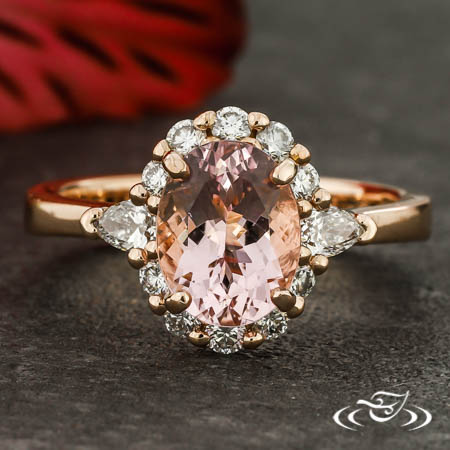
Morganite is a peachy-pink beryl that has become genuinely popular over the past decade, particularly in rose gold settings. It’s softer than sapphire (hardness 7.5–8), affordable, and pairs beautifully with warm metals. Its color can fade in prolonged direct sunlight.
Best for: Partners drawn to warm, romantic, feminine aesthetics. Pairs naturally with rose gold or yellow gold.
Aquamarine


Aquamarine is a light blue to blue-green beryl — the color of shallow tropical water. It’s clean, clear, and serene. For those of us in the Pacific Northwest, there’s something fitting about a stone that mirrors the waters of Puget Sound.
Best for: Partners who love cool, clear blue tones and want something distinctive without dramatic saturation.
Working with Heirloom Stones


Some of the most meaningful work we do involves incorporating family stones into new designs — a grandmother’s diamond, a parent’s sapphire, a stone passed down with no setting. If you have a stone with family history, we’d love to help you give it a new life.
Book a consultation at greenlakejewelry.com. Bring your stone, your ideas, or both. Seattle, Bellevue, and fully remote.