
Mokume : A Handcrafted Jewelry Technique

Mokume Gane refers to the metal used to create the design. It’s Japanese meaning is Wood eye, or Wood Grain. Our Mokume pieces are combinations of many different colors of Gold, often with alternating silver layers. The silver can be etched to create ridges or left smooth.
WHAT IS MOKUME-GANE?
Mokume-gane translates in Japanese to being “wood grain metal” or “wood eye metal,”
and is a jewelry technique that produces a natural looking wood grain pattern. Created
by layering contrasting precious metals such as yellow and rose gold, palladium, and
silver, the variation in how these metals are manipulated can produce an even wider
range of patterns. From geometric rivets, to slick rainbows of oil floating on water,
moon craters and landscape scenes, Mokume offers a time-honored method to achieve
these unique looks. We offer a diverse variety of Mokume techniques at Green Lake
and we are proud to share with you the story of your hand-fabricated band.

Let’s Dive into the Process with Jewelry Shayna
Step 1 :
A billet with variety of two or more metals is twisted to begin the pattern of the Mokume grain
Next, Shayna begins carving away at the billet of precious metals to reveal the layers within and begin the process of manipulating the pattern


Step 2 :
After the first round of carving the billet is rolled in a rolling mill
A rolling mill has adjustable rollers for making the billet flat


Step 3 :
Time to hammer straight – Sometimes the flattened beginnings of a band will begin to curve one direction or the other because of the twist
Fine hand details – Shayna will return to the bench to burr away and carve the metal to create a more pleasing pattern. It can take several rounds of burring to make the pattern


Step 4 :
Straight to curved – the ring bender gives shape to the band
Taking shape – here we see the metal as a band ready to be soldered. The small chips on top are solder. At this point the whole band is heated to melt and flow the solder


Step 5 :
Now connected – the band has been soldered and is ready for sizing and finishing
Using a mandrel – on a ring mandrel the band is rounded out and made to size


Making mokume gane rings is my favorite way to make a band at Green Lake. It’s a technique that I was taught here at the store by one of the other talented jewelers, Celeste Tracy, and allows me to indulge my love of metal and fabrication. I find it incredibly satisfying to create a one of a kind ring that will symbolize the unique commitment and love in a couple’s marriage for years to come.”
-Jeweler Shayna

Some of our Favorite Custom Mokume Bands
Because every mokume gane piece is shaped entirely by hand in our studio, no two designs ever turn out exactly the same. Below are just a few examples of the patterns our artisans have created, from tight, rippling waves to bold, organic swirls. Each combination of metals and each fold produces its own unique grain, which means the design possibilities are truly endless. Take a look through the gallery and imagine what your own one-of-a-kind piece could look like.
With Gems & Diamonds


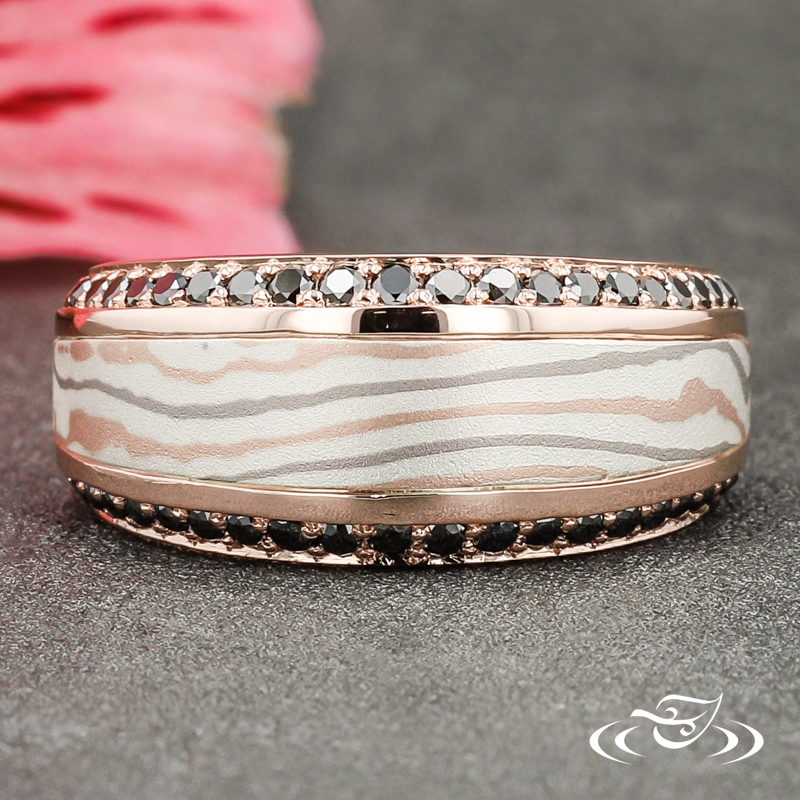


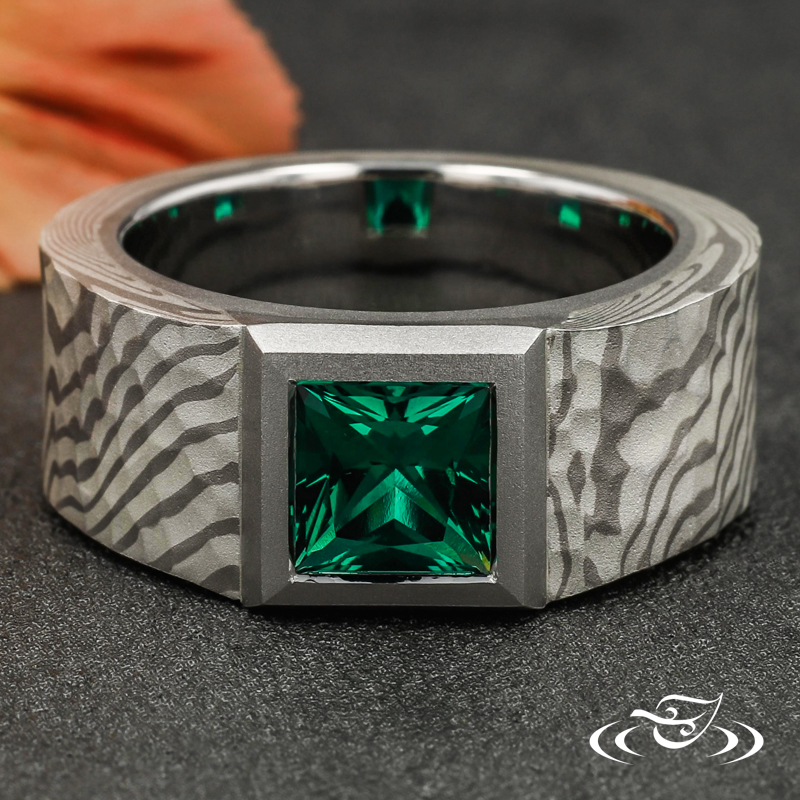


Mokume gane’s rippling metal patterns become even more striking when paired with gemstones and diamonds. The organic, wood-grain texture of the metal creates a beautiful contrast against the clean, faceted sparkle of a diamond, while colored gems can be chosen to echo or complement the tones already layered into the metal. Our jewelers set stones by hand into each mokume gane piece, working around the unique pattern of every design so the placement feels intentional rather than accidental. Whether it’s a subtle diamond accent nestled into the metal’s grain or a bold centerpiece stone surrounded by mokume’s signature swirl, adding gems opens up even more ways to make a piece truly one of a kind.


Mobius Mokume
Our jewelers also craft Möbius mokume gane designs, pieces twisted into a continuous loop with no beginning or end. Because the mokume gane pattern flows across the entire surface, the metal’s rippling grain catches the light from every angle as the band turns. Shaping that twist by hand while keeping the pattern intact takes real skill, and the finished piece feels as sculptural as it does wearable. With its symbolism of infinity, it’s a favorite choice for wedding bands.


